The factory is the product.
The software is the moat.
For thirty years, the precision manufacturing industry has bought software the same way: one tool for ERP, another for quality, another for scheduling, another for inspection, another for the floor. Eight vendors on a good day. Twelve on a bad one. None of them connected. All of them held together by people moving information between systems by hand.
The result is an industry that is digitized, but not digital. The records exist. The workflows do not. Every decision, every approval, every handoff still happens inside someone's head and an email thread.
We started from a different premise. If the workflow is the work, then the workflow is the company — and the company should be the software.
One platform.
One login.
One database.
Drawing intake. Supplier onboarding. Corrective action. Engineering change. First-article inspection. Calibration. Design history compilation.
Each of these is a regulated workflow that, in a conventional shop, lives across four systems and six people. In our facility, each is a single end-to-end workflow inside one platform — modeled, executed, and audited by software.
Drawings generate their own part records. Suppliers onboard themselves. Corrective actions draft from the underlying evidence. The quality system is not where the work gets filed after the fact. The quality system is the work.
Three forces. First time aligned.
Over one trillion dollars of US manufacturing demand is returning over the next decade. Aerospace and medical lead. Capacity is the constraint, and conventional shops cannot hire fast enough to meet it.
The AI models that can read a drawing, interpret a clause, and execute a regulated workflow became commercially viable in the last twenty-four months. The product we are building was not buildable in 2023. It is buildable now.
The median precision machinist is over fifty-five. The trade is not replacing itself. The next decade of capacity growth in this industry will come from output per person — not from headcount.
Every other player builds in an office.
We build on the floor.
The companies competing in this category are headquartered in San Francisco, Boston, Austin, and Toronto. They learn the industry by interviewing it. They validate the product through customer pilots.
We build inside an operating FDA-registered, ISO 13485 facility, on real production data, against real workflows that ship real parts to real OEMs. Every workflow in the platform was modeled by an operator who has run it under audit, signed the corrective action, and stood in front of the inspector.
The lab is the moat under the moat.
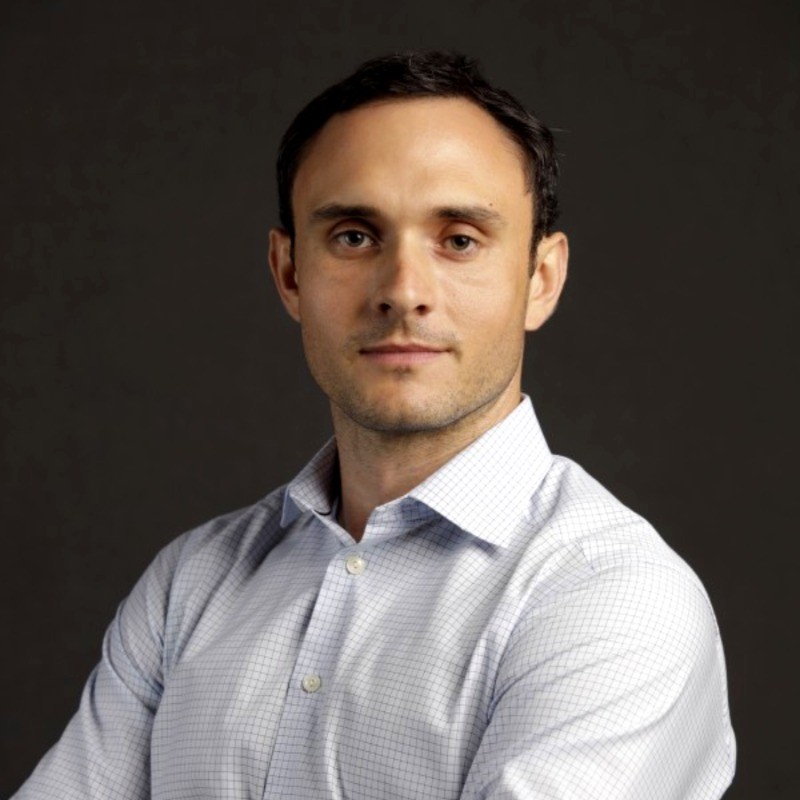
Oliver Zaiser
Oliver Zaiser is the founder of One Manufacturing, an AI-native manufacturing company building the operating system for regulated precision production.
Oliver founded his first company, a precision contract manufacturer serving orthopedic medical device OEMs, at twenty-three. Starting with no customers, facility, equipment, or quality system, he built it into an FDA-registered, ISO 13485-certified operation serving eleven OEM customers. The company was acquired eighteen months later, doubling the acquirer's in-house manufacturing capacity.
He later joined Skeletal Dynamics as General Manager of its Strategic Manufacturing Center, where he built the company's first in-house manufacturing operation for Class II orthopedic implants and surgical instruments from empty floor to certified production in under a year.
He founded One Manufacturing because the software stack behind precision manufacturing is broken. The tools record what happens in a facility, but they do not run it. The real work still lives in people's heads, email threads, spreadsheets, and meetings.
One Manufacturing exists to replace that fragmented stack with one workflow-native operating system: software that models the work, executes the decisions, preserves the audit trail, and runs the factory from the inside out.